
Significant weight loss has always come with a lesser known side effect: it changes the face. Aesthetic providers have seen it for decades in patients after bariatric surgery or major lifestyle changes. What changed recently is the scale. With GLP-1 medications making substantial weight loss achievable for millions of people, what used to be an occasional conversation in our treatment rooms has become a daily one.
Patients describe the same pattern: looking hollow in photos, makeup settling into lines that were not there a year ago, a jawline that used to be sharper. And many share the same frustration. They did something good for their health, and the mirror does not reflect it.
The cause of the weight loss does not matter. Training, diet, new habits, or medication, the effect on the face is the same. This article explains what rapid weight loss actually does to the face, which treatments address it, and when the right answer is to wait.
What "Ozempic Face" Actually Means
The term is a media nickname. You will not find it in any medical textbook, and no doctor will diagnose you with it. What it describes, though, is real: the set of facial changes that tend to follow rapid weight loss, named after the medication that made those changes suddenly common.
The name is misleading in one way. The medication does nothing unusual to your face. It accelerates fat loss, and that speed amplifies an effect that any fast weight reduction produces.
What Is Actually Happening to Your Face
Facial fat sits in distinct compartments rather than a smooth layer. You lose from those compartments, and you do not choose which ones.
That creates two separate issues, and the distinction drives everything that follows.
Volume loss. The structure underneath deflated. Temples flatten, cheeks lose support, the scaffolding is smaller than it was.
Skin laxity. Your skin did not shrink to match. Rapid loss also tends to leave it thinner and less elastic.
Tightening will not fix deflation. Filler will not fix laxity. Most patients have both, in a ratio unique to them, and treating the wrong one is expensive and disappointing.
It also explains why this has little to do with age. The mechanism is fat loss, which is why patients in their thirties are having this conversation in our treatment rooms.
Structure First, Surface Second
Because two different problems are at play, the first task is telling them apart. This is what the Full Face Assessment at The Aesthetic Method is designed for. Before recommending anything, your injector maps how much of what you see comes from lost volume, how much comes from loose skin, and where exactly the loss landed on your face.
That last part matters, because the most common mistake with these faces is treating the area the patient points at. The loss is distributed. The correction has to be too. Filling one hollow on a face that deflated everywhere does not restore balance, it draws attention to the one area that now looks different from its neighbors.
So we work in order.
Dermal Fillers
Hyaluronic acid filler replaces lost volume immediately, placed where the structure used to be. For weight loss patients the load bearing areas usually come first: temples, midface, chin and chin shadow. Restore those and the rest of the face reads better before anything else is touched.
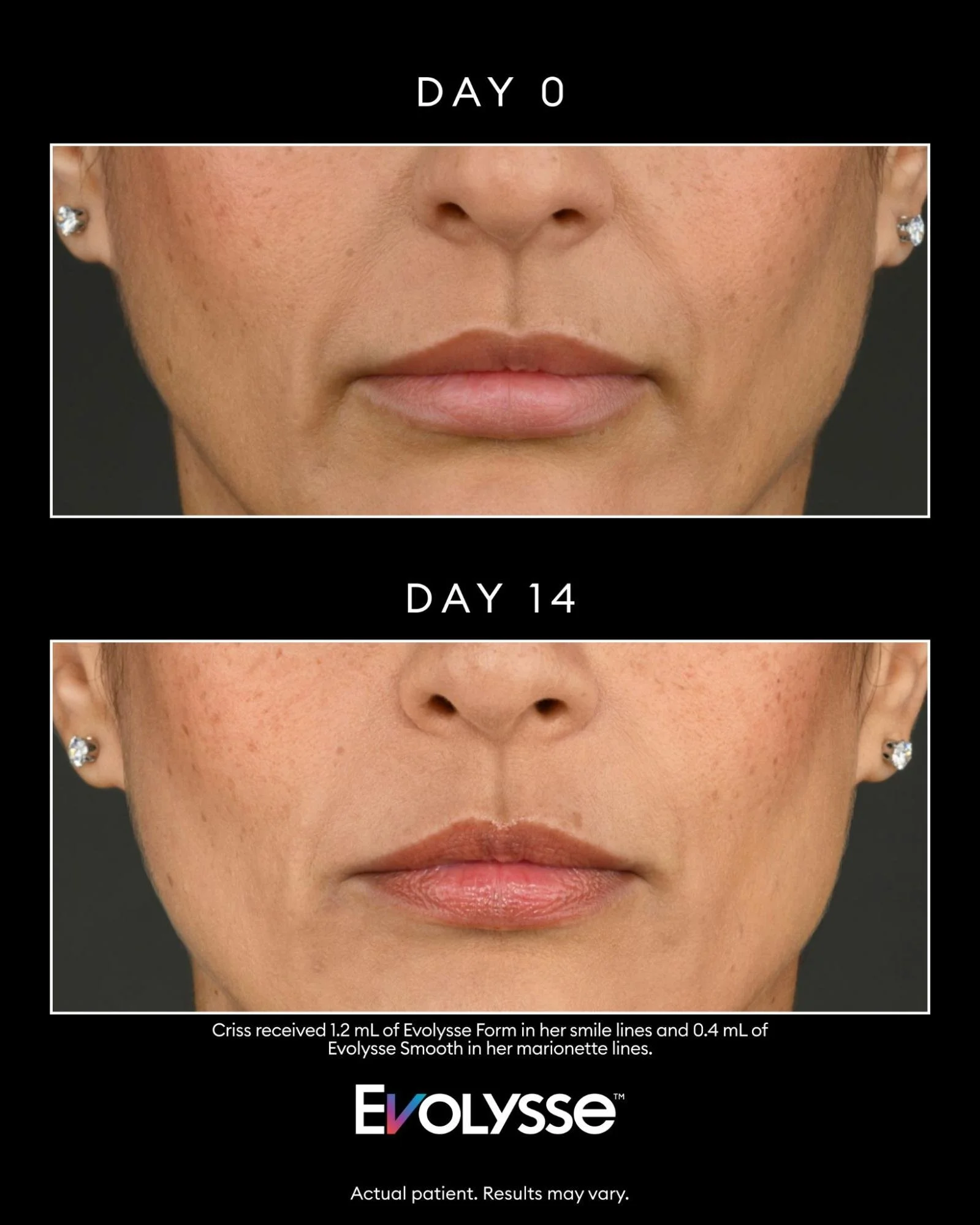
Nasolabial folds are a good example of how the areas connect. These lines, running from the sides of the nose to the corners of the mouth, often deepen after weight loss and contribute to a tired or older look. The reason is structural: when the midface deflates, the cheek drops and the fold deepens. So we support the midface first, then treat the fold itself. Our favorite filler for this area is Evolysse™, the only hyaluronic acid filler whose manufacturer specifically names weight loss as a cause of the folds it treats.
Our injectors build these plans area by area, matched to where your face actually lost its volume.
Biostimulators
Hyaluronic acid filler gives an immediate result: the volume is restored the moment it is placed. Biostimulators take a different route to the same goal. Injected over a series of sessions, they stimulate your own collagen production, so the volume builds gradually over several months and the improvement comes from your own tissue.
That slower mechanism suits weight loss patients well, because the loss is rarely one hollow. It is diffuse. Rebuilding broadly across a series often fits that pattern better than adding volume in isolated spots. Plans typically run over the course of a year.
Restoring Elasticity
Volume is only half the picture. The skin itself needs attention, because rapid weight loss leaves it looser, thinner, and less elastic than before.
Sylfirm X radiofrequency microneedling stimulates collagen and elastin in the deeper layers of the skin, targeting crepiness, texture change, and mild laxity. It will not replace lost volume, and we will tell you that directly. What it improves is the quality and firmness of the skin sitting over whatever structure you have. At our Ferndale medspa these treatments are performed by our licensed medical estheticians, Meaghan and Kelsey, usually as a series of three to six sessions spaced four to six weeks apart. Our guide to RF microneedling covers preparation, aftercare, and how to shorten downtime.
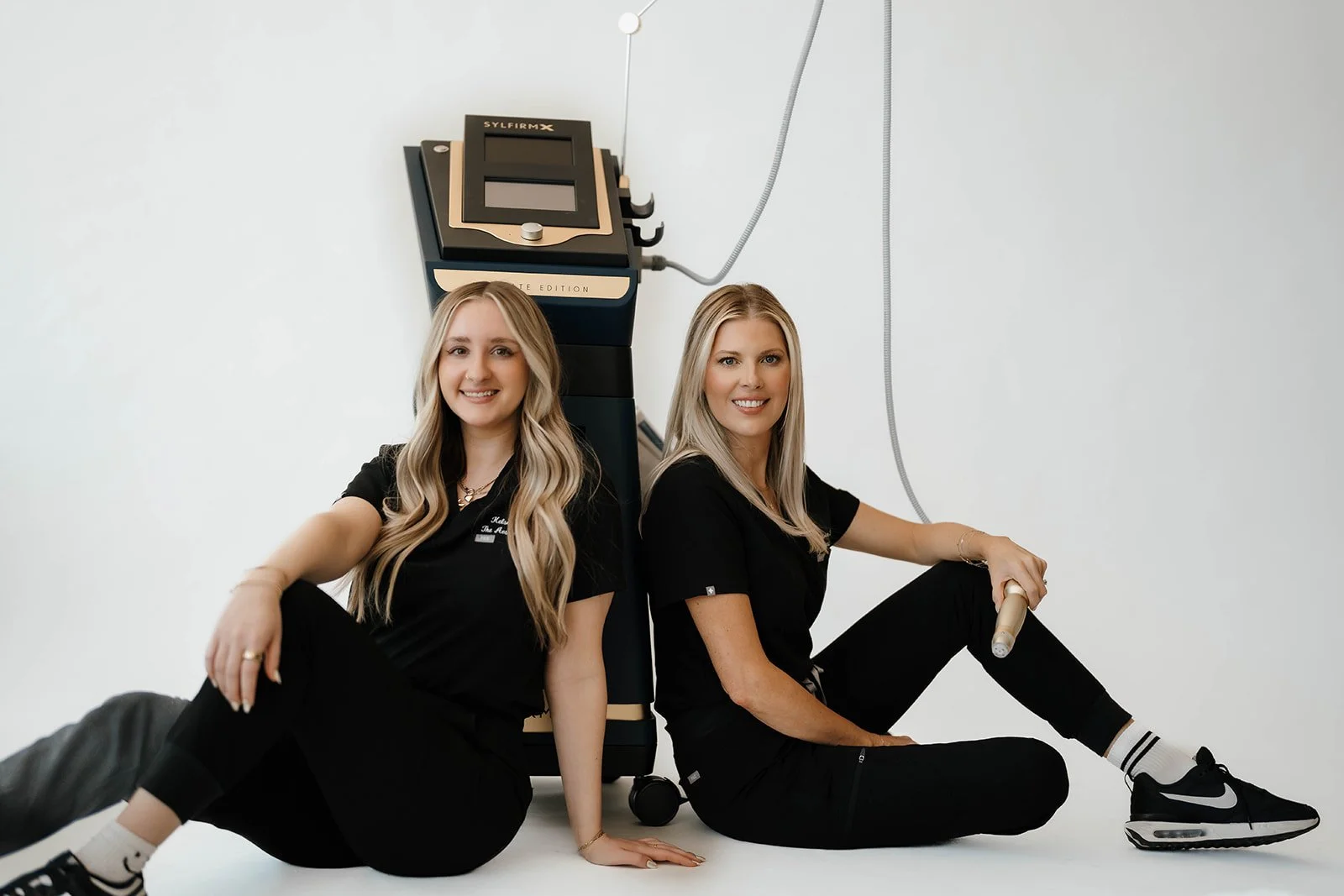
Our two licenced medical estheticians, Meaghan and Kelsey, and the Slyfirm X device
PRF EZ Gel is derived from your own blood and is often our preference for the under eye area, where hollowing after weight loss is common and the skin is at its thinnest. Dana specializes in this treatment, and you can see how it fits into a full face plan in a recent case study.
A Word on Neurotoxin
Tox stays valuable after weight loss, but the dosing conversation changes. A face that already reads as hollow can be made to look more drained if the upper face is over relaxed, and since rapid weight loss takes muscle along with fat, a dose that suited you two years ago can overshoot now. This is one of those situations where the experience of your injector genuinely matters. When frown lines are the concern, Jeuveau® is our neurotoxin of choice: designed exclusively for aesthetics, with some patients seeing visible softening within two days.
When to Treat, and When to Wait
Still actively losing weight? Your face is still changing. Volume placed today goes into a face that will look different in four months. Treatment can still make sense, but results will need adjusting and you should know that before spending anything.
Weight stable for a few months? This is the right time for definitive volume work.
In between? Collagen supporting treatments work gradually anyway. Starting biostimulators or radiofrequency microneedling while you are still losing often makes sense, because their timeline matches yours.
If you are on semaglutide, tirzepatide, or any other weight loss medication, tell your injector. It does not disqualify you from anything, but it changes timing and sequencing.
And we will tell you if waiting serves you better. We would rather have that conversation than treat a face that is still moving.
Your face at month three is not your face at month twelve. That is why we build long term care plans with scheduled reassessment rather than one large appointment. It protects your investment as your face settles.
Ready to find out what your face actually needs?
Book your Full Face Assessment at our medspa in Ferndale. We will tell you what is driving what you are seeing and build a plan that fits where you are in your journey.
Results vary by individual. All treatments at The Aesthetic Method are performed by licensed medical providers. This article is for educational purposes and does not replace medical advice. Decisions about weight loss medication should be made with the provider prescribing it.